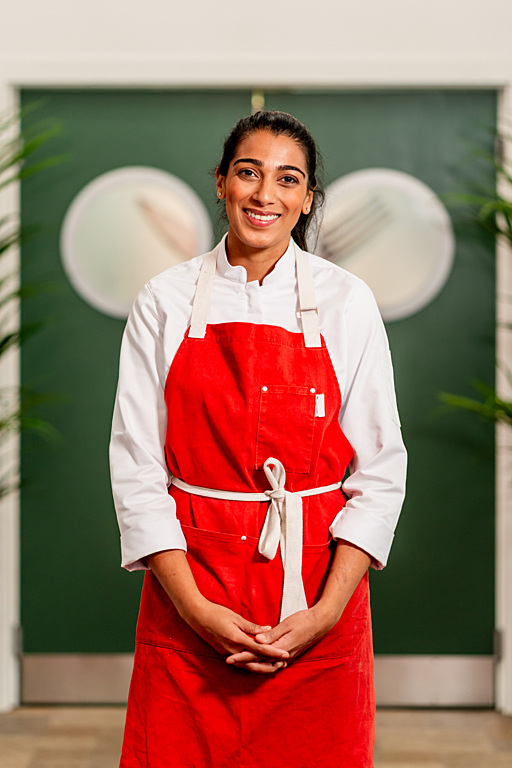
Great British Menu (GBM) returned to our screens on 24 February 2026 for season 21. The BBC2 show puts the nation’s most talented chefs to the test. At Women in the Food Industry we are continuing our series of interviews with the strong female line-up of chefs from across Britain competing to serve their dish at the final banquet. Our co-founder, Mecca Ibrahim, interviewed private chef Nikita Pathakji creating bespoke menus for her clients, using all her skills garnered over her experience in Michelin kitchens.
Originally from Derby, Nikita, began her career with an apprenticeship at Westminster Kingsway College, combining study with hands-on kitchen experience.
How did you start working in the food industry? And where did you train to be a chef?
Becoming a chef wasn’t originally the plan for me. Growing up in Derby, I always loved food and cooking, and my family were constantly hosting gatherings where food played a central role. But academically I was heading in a very different direction.
I was doing A-levels in maths, physics and chemistry and I wasn’t enjoying them and I definitely wasn’t very good at them.
It was a conversation with my sister, who was studying chemistry at university, that changed everything. She said to me, ‘You’re going to hate this – it’s not what you want to do.’ Then she pointed out that I loved cooking and was actually good at it, and suggested I pursue that instead. Something about that just clicked in my brain.
My mother already living in London, the move from Derby was relatively straightforward. I applied for an apprenticeship at Westminster Kingsway College, which paired training with hands-on kitchen experience.
My first role was at The Lanesborough hotel, where I began working in the hotel kitchen. But it wasn’t long before I became intrigued by the hotel’s fine dining restaurant, Céleste, which had just been awarded a Michelin star.
I suddenly had stars in my eyes and was Determined to learn as much as possible. I gradually managed to “weasel” my way into the Céleste kitchen too, giving me an early introduction to Michelin-starred cooking.
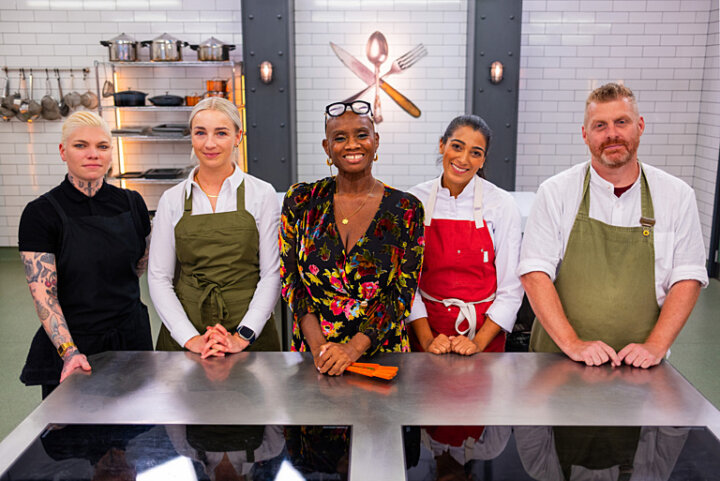
This is your first time on Great British Menu, how did you get onto the show and how did you prepare for the British Movies brief?
I’d been watching Great British Menu for years. It’s one of those shows where you see chefs you really admire taking part, so it’s always been on my radar. I worked at one of Phil Howard’s restaurants for a long time, so I’d followed a lot of the chefs who had gone through the competition and always thought it looked like an incredible experience.
Then one day I received an email asking if I’d be interested in taking part. For me it was a complete no-brainer – there was no way I was going to say no.
When I found out the theme was British movies, I was actually really pleased. Some themes can be quite tricky — things like the Olympics or historical figures can feel a bit restrictive. With films, there’s just so much scope. You can tell stories through flavours, but you can also reference things you see on screen or moments from the film itself, so there were lots of different directions I could go in.
The part I was most nervous about wasn’t the cooking – I know I can cook good food. It was the storytelling side of it. Developing a narrative around each dish is a skill in itself, and that was definitely the challenge for me. But once I started thinking about the films and the flavours I could link to them, it became a really exciting process.
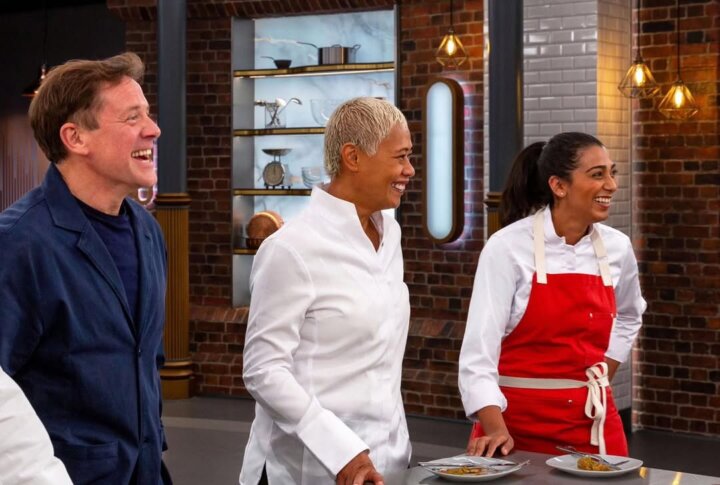
It’s your first time on Great British Menu. How did you find working in the studio with all the cameras and crew?
I’d actually had some experience of cooking on camera before, as I won MasterChef: The Professionals in 2022. So stepping into the studio for Great British Menu didn’t feel completely unfamiliar.
That said, once you start cooking, you really do just focus on the food. The cameras are there, of course, but they’re not something you’re thinking about while you’re in the middle of service. I wasn’t trying to perform or play up to them in any way – my only goal was to cook the dishes exactly the way I had practised them.
When you’re concentrating on timings, techniques and making sure everything goes out the way you want it to, everything else just fades into the background.
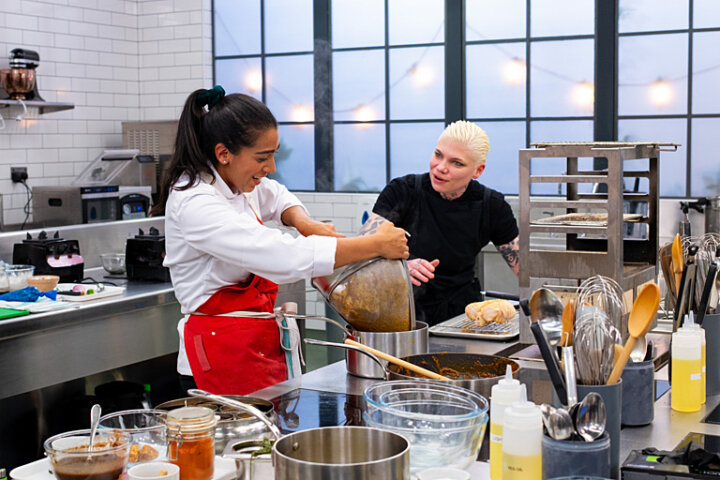
Without giving anything away about what happens on the show, which course was the hardest to prepare and research for?
I think the main course was probably the most challenging. I knew almost immediately which film I wanted to base it on because it’s closely linked to my region – and specifically to where I’m from in Derby. So the inspiration itself came quite easily.
The challenge was that it’s a historical period film, whereas my cooking style naturally leans towards bold flavours and lots of spice. Trying to balance those two things – staying true to the film while still keeping my own personality and style in the dish – took a bit of work.
It was really about finding a way to connect the story of the film with the kind of food I love to cook. It took some thought, but in the end I managed to make it work in a way that still felt authentic to me.
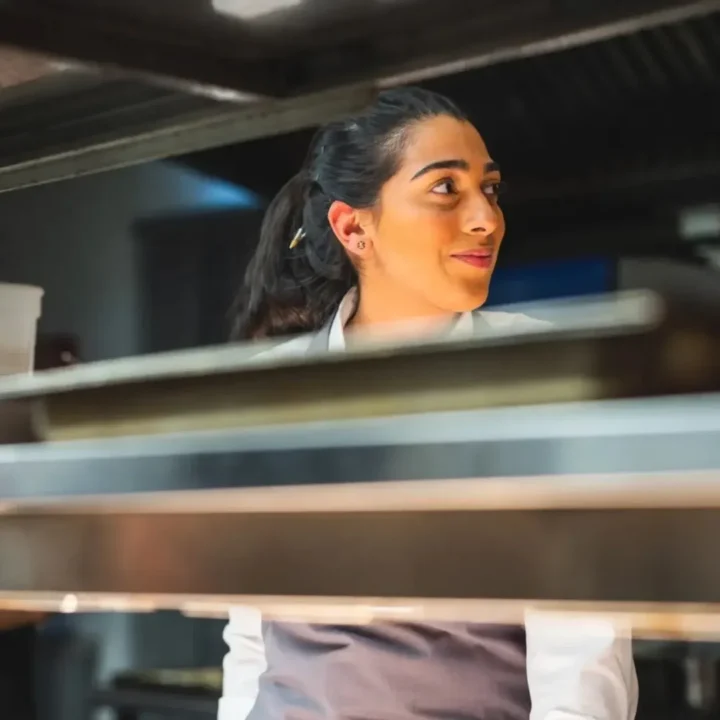
GBM is very much known for its props, did you embrace the props on the show?
I definitely embraced the props. They’re such a big part of Great British Menu, so I wanted to have fun with that side of things. I did look into some of the professional prop makers that chefs have used in the past, but they were way out of my budget.
In the end it became a bit of a family project, which actually made it even more special. My stepdad made a lot of the props I used on the show, and my sister helped design a box that featured in one of the dishes. After that it was a lot of trawling the internet — places like Etsy — to find all the little pieces that would bring everything together.
It took a bit of creativity, but I think we did a really good job in the end. I was really happy with how it all turned out.
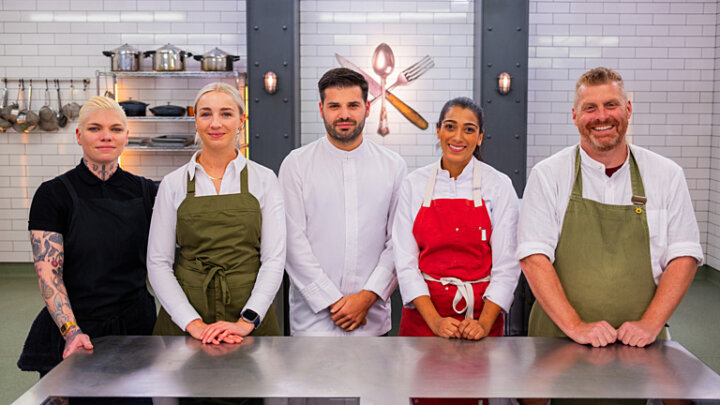
Which chef that you have worked with has given you the most inspiration?
That’s an easy one for me – Mark Kempson. I worked with him at Kitchen W8, which is one of Phil Howard’s restaurants.
I joined after a pretty tough period in my career. I’d been chasing experience in two- and three-Michelin-star kitchens and had just come from Core by Clare Smyth. It was incredibly intense and, if I’m honest, I found it a difficult environment – it just wasn’t the right fit for me.
When I met Mark, I was completely open with him about what I’d experienced. He really took me under his wing and supported me, and that made a huge difference. He’s someone I still see as a mentor today.
I’m currently in the process of opening my own restaurant, and he’s still the person I go to whenever I need advice or have questions. Having someone like that in the industry has been invaluable.

If you were marooned on a desert island, what was the one type of dish you could happily live on?
If I had bread, cheese and wine, I’d be perfectly happy. I probably wouldn’t last very long, but I’d definitely enjoy myself while I was there!
Finally, what do you know now that you wish you could have told your younger self when you were starting out?
I think the biggest thing would be to trust my instincts.
At the start of my career, I was very focused on chasing Michelin stars and working in the most highly decorated kitchens. But deep down, I often knew those environments weren’t necessarily the right fit for me.
Looking back, I’d tell my younger self that it’s okay to choose your own path. You don’t have to follow the same route as everyone else. If you trust your gut and work in the restaurants that genuinely inspire you, you’ll probably have a much better – and happier – experience along the way.
Nikita will be appearing on Great British Menu from Tuesday 10th March 2026 representing the Central region. Look out for more in our series of interviews with the great women chefs on Great British Menu 2026 – this page will be regularly updated.