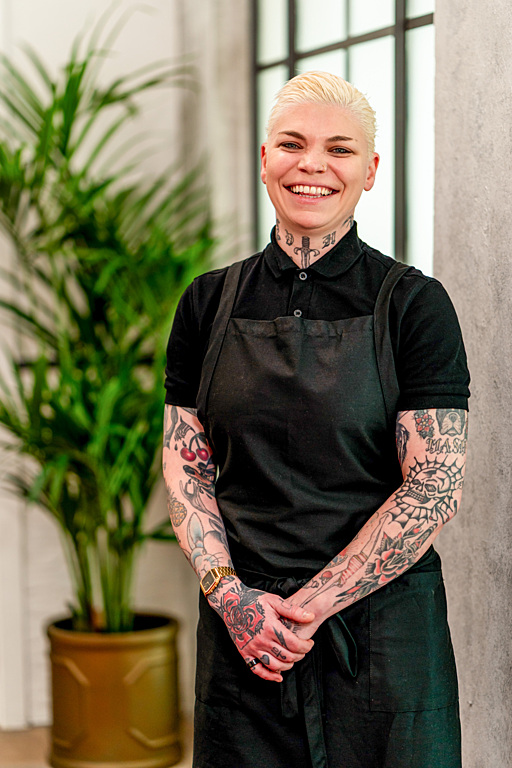
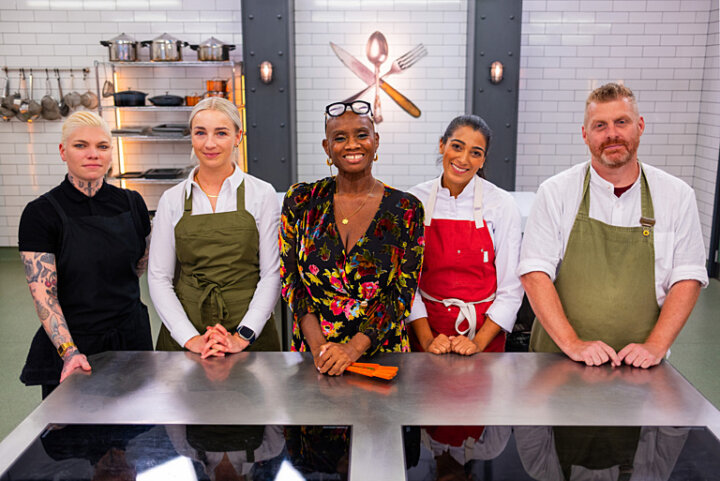
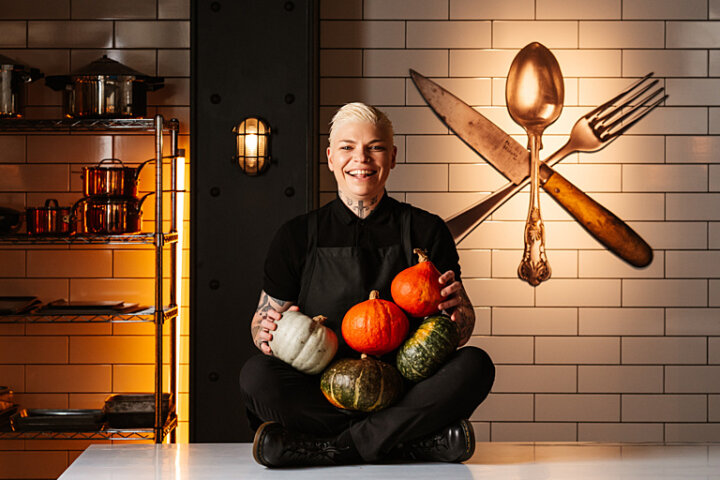
Great British Menu (GBM) returned to our screens on 24 February 2026 for season 21. The BBC2 show puts the nation’s most talented chefs to the test. At Women in the Food Industry we are continuing our series of interviews with the strong female line-up of chefs from across Britain competing to serve their dish at the final banquet. Our co-founder, Mecca Ibrahim, interviewed chef Ash Valenzuela-Heeger who opened Riverine Rabbit in January 2024, a 12-seat open kitchen in Stirchley. Her restaurant was awarded a Bib Gourmand in the 2025 Michelin Guide, and in the same year, Ash received the Michelin Young Chef Award and was shortlisted for Best Chef at the 2025 British Restaurant Awards.
Originally from South Africa, Ash began working as a pot washer in kitchens at 16, before training at cookery college in classic Cordon Bleu techniques.
How did you start working in the food industry? And where did you train to be a chef?
I became interested in food at a very young age and was eager to get into professional kitchens as soon as I could. While I was still in high school I arranged some work experience in a restaurant kitchen, and that early exposure really confirmed for me that this was what I wanted to do. I loved the pace, the camaraderie and the creativity of it all, and from that point on I was determined to pursue cooking as a career.
After graduating from school I went straight into cookery school to begin formal training. I studied at the Silwood School of Cookery in Cape Town, South Africa, which is the oldest cookery school in the country and offers traditional Cordon Bleu–based training.
The classical grounding I received there gave me a really solid foundation in technique and discipline. Learning those fundamentals properly allowed me to build confidence in the kitchen and, later on, gave me the freedom to experiment and develop my own style of cooking.
This is your first time on Great British Menu, how did you get onto the show and how did you prepare for the British Movies brief?
I was actually approached by the production team and asked if I would be interested in being cast on Great British Menu. I jumped at the chance without a moment’s hesitation. It’s a show I’ve watched and admired for many years, so it felt like a real honour to be invited to represent the Central region.
I’m also a huge fan of film, so when I heard the theme for this year was British movies I was genuinely excited. I spent time diving into the history of cinema and filmmakers connected to the Central region, but I was also really keen to champion my home city of Birmingham and celebrate the incredible talent that has come out of the West Midlands.
There was definitely an added layer of pressure because the Central region isn’t actually my birthplace. However, Birmingham has been my home for the past six years and it has welcomed me with open arms. I really wanted to show my appreciation for the city and represent it in the best way possible. At the end of the day my main goal was simply to do Birmingham and the region proud, whatever the outcome.
In terms of preparation, I practised relentlessly. I wanted to feel completely confident that I had considered every possible thing that could go wrong and how to handle it. The build-up to competing is incredibly intense, and I have huge respect for anyone brave enough to put themselves through it.
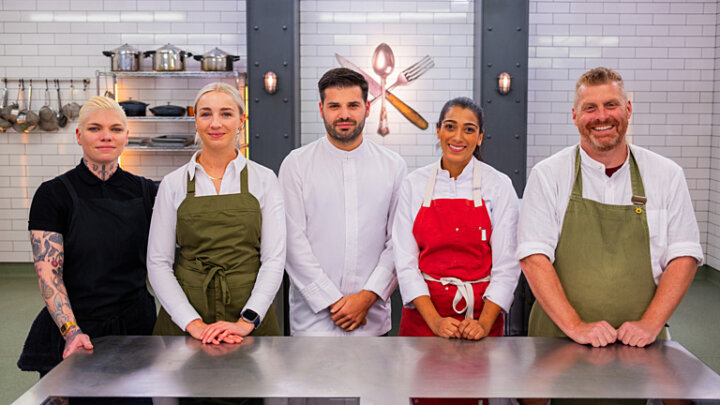
It’s your first time on Great British Menu. How did you find working in the studio with all the cameras and crew?
I found it quite overwhelming, if I’m honest. I knew the production value of the show would be incredibly high because it always looks amazing on television, but actually stepping into that environment was still a bit of a shock.
It really highlighted just how important preparation and self-belief are in this competition. When you’re surrounded by cameras, crew and the pressure of the clock, you have to rely on the work you’ve put in beforehand and trust your instincts in the moment.
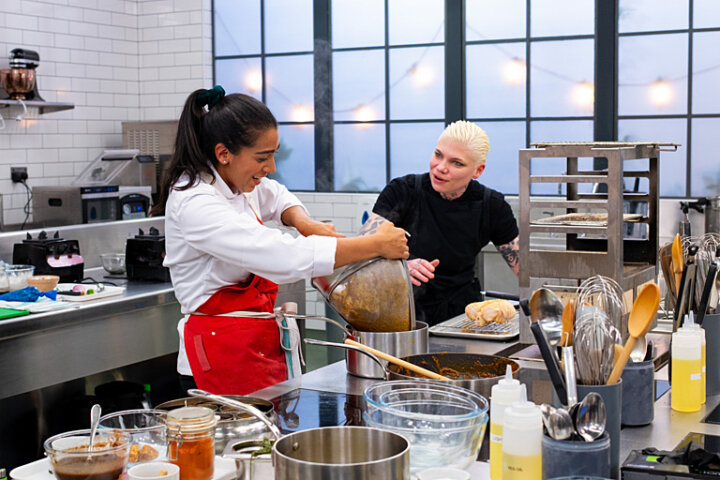
Without giving anything away about what happens on the show, which course was the hardest to prepare and research for?
Without a doubt, my dessert course was the most technically challenging and the riskiest dish on the menu.
I really wanted to end the menu on a high note and take a proper swing at doing something memorable. Because of that, it was the dish with the greatest potential to either really succeed or completely fall apart.
But that’s part of what Great British Menu is about – pushing yourself, taking risks and setting the bar as high as you possibly can.
GBM is very much known for its props, did you embrace the props on the show?
I tried not to let the props become the main focus of the dishes. For me, the food always has to come first.
That said, I still wanted to respect the brief and make sure the storytelling element was there. My aim was for the props and presentation to complement the dish rather than dominate it — something that could tie into the theme without needing too much explanation.
Which chef that you have worked with has given you the most inspiration?
I’ve been incredibly fortunate to work with some amazing chefs and mentors throughout my career, which now spans almost two decades. Because of that, it would be impossible to single out just one person.
Each kitchen and each chef I’ve worked with has shaped me in different ways, whether it’s through technique, discipline, creativity or simply their approach to hospitality.

If you were marooned on a desert island, what was the one type of dish you could happily live on?
Anything Korean – but if I had to be specific it would be mandu dumplings, anchovy broth and plenty of kimchi. I’d be very happy living on that forever.
Finally, what do you know now that you wish you could have told your younger self when you were starting out?
To be patient.
That’s something I still remind myself of regularly. When I was younger I wanted everything to happen quickly — I was always looking ahead to the next step or the next opportunity.
Over time I’ve learned to appreciate the quieter, more routine moments in the kitchen and in life. Those everyday moments are important, because they make the peaks and successes that eventually come along feel even more rewarding.
Ash will be appearing on Great British Menu from Tuesday 10th March 2026 representing the Central region. Look out for more in our series of interviews with the great women chefs on Great British Menu 2026 – this page will be regularly updated.