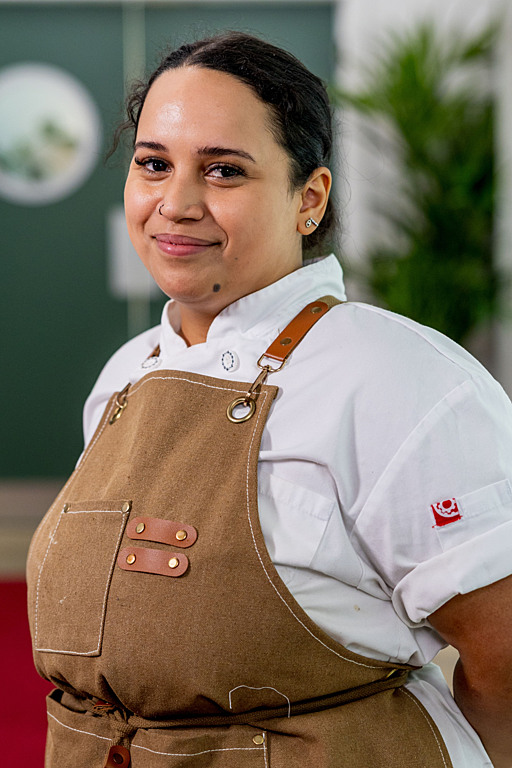
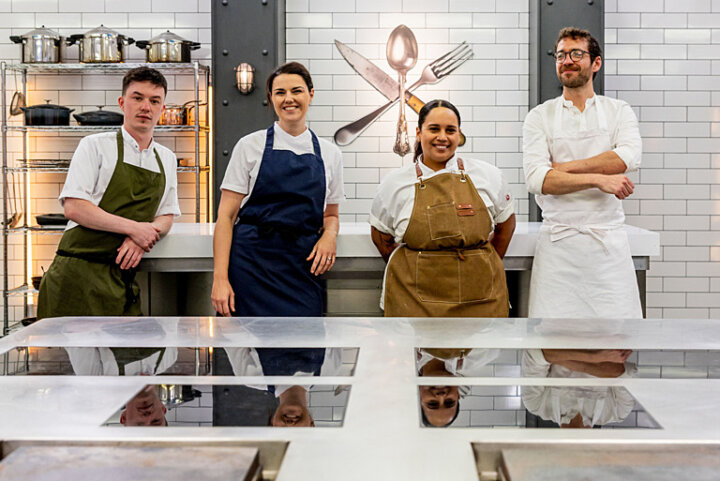
Great British Menu (GBM) returned to our screens on 24 February 2026 for season 21. The BBC2 show puts the nation’s most talented chefs to the test. At Women in the Food Industry we are continuing our series of interviews with the strong female line-up of chefs from across Britain competing to serve their dish at the final banquet. Our co-founder, Mecca Ibrahim, interviewed Kristin Reagon, Head Chef at Lasair, the fine dining restaurant at Finn Lough Resort in Co. Fermanagh.
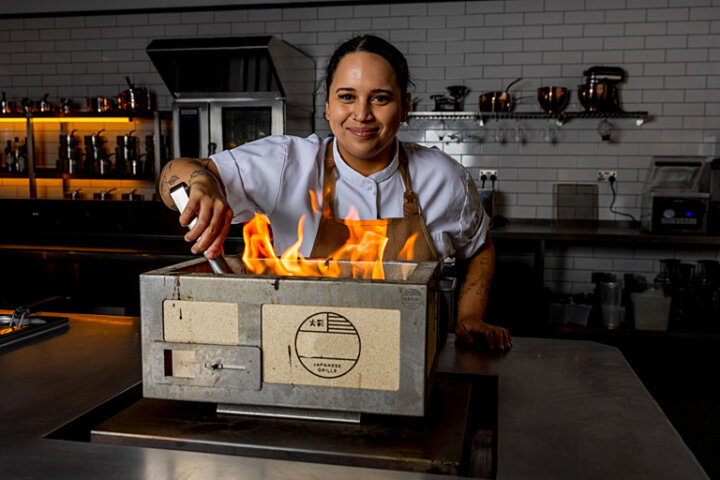
Originally from South Africa, since joining the Lasair, she has led an all-female kitchen team, creating menus that combine local produce and her love for cooking over coals.
How did you start working in the food industry? And where did you train to be a chef?
Originally, I had no plans to work in food at all. I wanted to study chemical engineering because my uncle was a chemical engineer. When you see someone in your family doing well, you naturally think you should follow the same path – and I liked the idea of a career that paid well.
But when I spoke to him about it properly, he was very honest. He told me the job was extremely demanding and not worth it. Even after that conversation I was still determined to pursue it. At school I was studying physics, biology and chemistry and applying to universities to study chemical engineering.
Then, halfway through my final exams, everything changed. A cooking competition popped up on my sister’s phone and she insisted that I enter. The prize was a full scholarship to a chef school in Cape Town if you won. I entered almost on a whim, cooked the kind of food I’d want to eat myself, and somehow won. The prize was a two-year scholarship to Sense of Taste Chef School in Cape Town.
At first, I told myself I’d just try it for a year. It was a free opportunity and I thought if I didn’t enjoy it I could always go back to studying engineering. But once I started, I never looked back.
The course was incredibly intense. The school only takes around 20 students, so you get a huge amount of personal attention from the chefs. We had one day of theory each week and the rest was practical — cooking four or five dishes a day while learning French techniques and terminology, as well as different cuisines including South African and Italian cooking. They try to give you as many skills as possible in that first year so you can go into any part of the industry.
In the second year you move into internships. I worked at Aubergine in Cape Town and then at The Pot Luck Club, which is where I really fell in love with Asian fusion flavours. I’ve always been very competitive, so I also entered more competitions along the way. One of those led to an opportunity to spend a year working in the US — flights, accommodation and pay included after my team came second. From there I continued moving between restaurants and building experience.
,
This is your first time on Great British Menu, how did you get onto the show?
I’m not entirely sure how I came onto their radar, but last year was quite a big one for me professionally, so I imagine that helped. Our restaurant received a 7/10 in a review from the Gastro Gays in The Irish Times, which was a great moment for us. I was also included in Northern Ireland on a Plate, a book featuring 20 chefs and restaurants from across the region sharing recipes from their kitchens.
A few years earlier I’d also reached the regional final of the S.Pellegrino Young Chef competition. So there were lots of small milestones along the way. I never actually asked the producers why they chose me — I was just happy to be invited and grabbed the opportunity.
How did you prepare for the British Movies brief?
When it came to the theme, I actually felt quite confident because I love films. On my days off, one of my favourite things to do is simply watch a movie and relax. The challenge was that I’m not originally from Northern Ireland, so getting to grips with the local film culture took a bit of research.
What I noticed quite quickly was that many Northern Irish films lean towards darker storytelling — either quite sad or quite scary — and there aren’t that many comedies. In a strange way, that actually made the creative side easier, because those moods translate well visually on a plate. It’s much easier to create a sense of drama, tension or even “gore” through presentation than it is to convey something light-hearted.
At the same time, I wanted my menu to celebrate women. I tried to draw inspiration from female directors and actresses wherever possible, because it felt important not only to represent my cooking but also to highlight women making an impact in other creative industries as well.
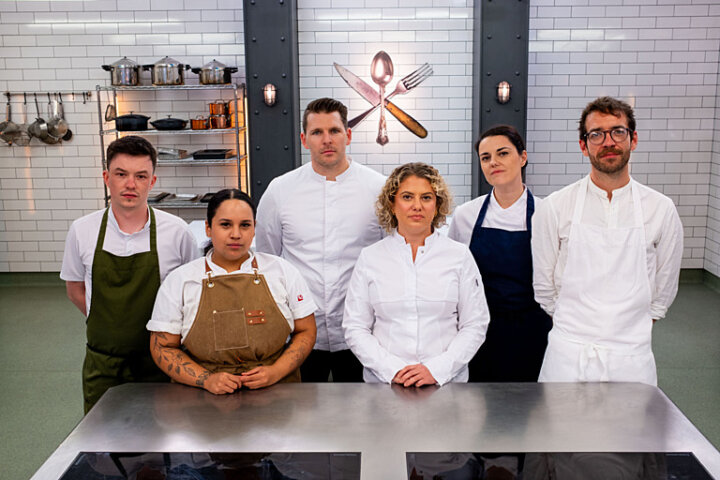
It’s your first time on Great British Menu. How did you find working in the studio with all the cameras and crew?
At the beginning it was definitely nerve-racking because you don’t really know what to expect. Everything feels quite overwhelming when you first arrive. But once you’re actually in the kitchen and start cooking, you very quickly forget the cameras are even there. Sometimes you only realise they’re filming when someone asks you a question and you suddenly notice there’s a camera right in front of you.
Strangely, I found the interview they filmed at my restaurant much harder than cooking in the studio. It was just a couple of people asking questions while staring straight at you, and that felt quite intimidating – especially knowing that the rest of the team in the kitchen could hear everything. That was much more pressure than the filming during the competition itself.
Once the cooking started, the cameras actually became the easy part. You get comfortable with them very quickly and they almost fade into the background. For me, the real pressure was the judging. Standing there while the judges talk about your dish and give their scores is terrifying. Your mouth goes completely dry, you’re sweating, and you feel like you can barely breathe. That moment was by far the most intense part of the experience.
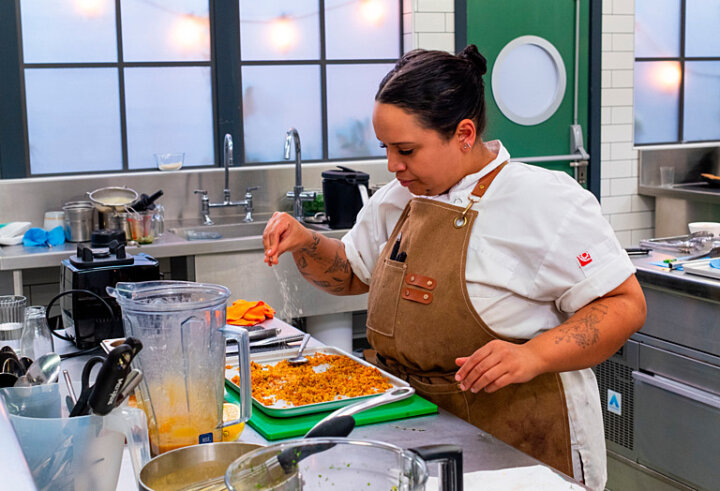
Without giving anything away about what happens on the show, which course was the hardest to prepare and research for?
The starter was definitely the hardest for me. It had to be a vegan dish, and I also set myself quite a complicated brief around the concept and the props, which made it even more challenging to bring everything together.
Trying to align the theme, the storytelling, the props and the food itself turned out to be much more difficult than I expected. As soon as I started developing it, I realised I’d probably made things harder for myself than they needed to be.
I also find vegan cooking quite challenging because I’m not vegan myself – and I love cooking with meat. When you’re working purely with vegetables, you have to work much harder to build depth of flavour. Something like beetroot, for example, naturally has that earthy taste, so transforming it into something really exciting on the plate takes a lot of thought and technique. People sometimes assume the vegan course is the easiest, but I’d actually say it can be one of the most difficult.
Once I moved on to some of the other dishes, I felt much more comfortable. The flavours came together more naturally and I could cook more instinctively, which made the process a lot more enjoyable.
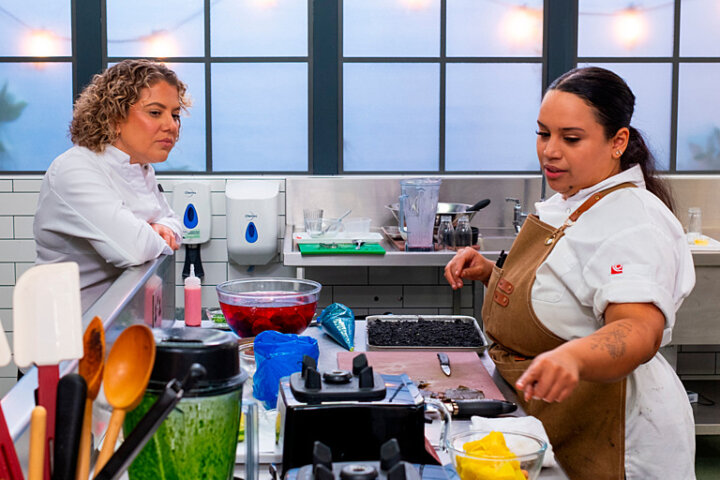
GBM is very much known for its props, did you embrace the props on the show?
Yes, I really enjoyed that part of it. A lot of my dishes had quite a theatrical element, and I liked being able to create drama around the plate. For me it wasn’t just about the food – it was also about building a visual moment that connected to the theme.
The props allowed you to play with different moods. Some dishes were designed to look quite dark or scary, others were more dramatic or beautiful. That creative side was really exciting.
That said, there were definitely some challenges. I had brought all my props in suitcases when I flew over and unfortunately quite a few of them arrived broken. So there were moments where I had to think very quickly and improvise – there was quite a bit of superglue involved trying to put things back together!
It was stressful at times, but also fun. The whole thing felt a little bit chaotic, but in a good way.
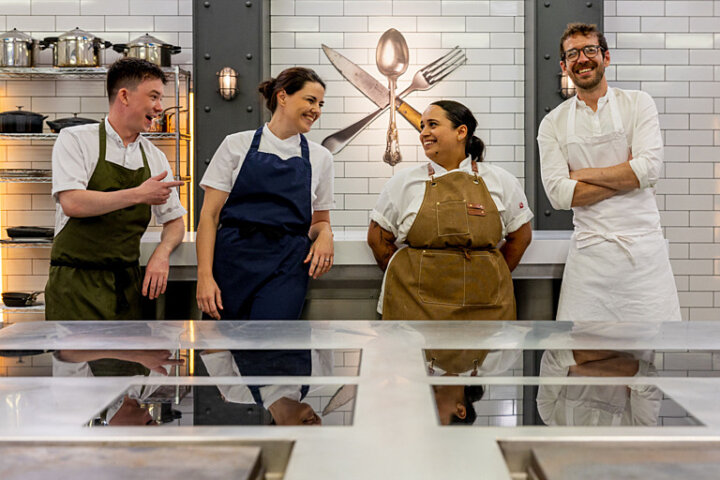
Which chef that you have worked with has given you the most inspiration?
One of the biggest influences on my career has been Farrell Hirsch, who is currently at Morston Hall. We worked together at The Greenhouse in Cape Town, where he was the head chef and I was the senior pastry chef at the time.
He was a huge mentor to me and gave me the opportunity to step into more of a leadership role. He really encouraged me to take ownership, delegate and push my creativity further. Farrell was always challenging me to think differently about flavour combinations. He’d come to me with ideas like pairing coriander with watermelon for a dessert and ask me to make it work. From there it was all about experimenting, tasting and refining until we found the right balance.
He’s incredibly driven and very clear about what he wants, which was both motivating and challenging. Working with him really pushed me to experiment more and to be fearless when it comes to flavour. Even now, if I’m stuck on an idea, I’ll message him and ask what he thinks about a combination. He’s never afraid to tell me I can do better – and that kind of honest feedback has always helped me grow.

If you were marooned on a desert island, what was the one type of dish you could happily live on?
I’m a big fan of raw fish, so I’d probably be very happy living on something like ceviche. If I had fresh fish, a bit of lime, garlic and salt, I’d be completely content. Simple, fresh flavours like that are some of my favourites.
Finally, what do you know now that you wish you could have told your younger self when you were starting out?
I’d tell myself to believe in myself more and to be more confident from the beginning.
When I was starting out, particularly during my internships, most kitchens were very male-dominated and it could be quite an intimidating environment. There were moments where I felt like I had to prove myself constantly.
But I learned quite quickly that you have to stand your ground and set boundaries. I made it clear that I expected to be treated with respect — not differently because I was a woman, but simply as another professional in the kitchen. Once I did that, I gained respect quite quickly.
So if I could go back and give my younger self advice, it would simply be to trust yourself, be confident in your abilities and never be afraid to stand up for yourself.
Kristin will be appearing on Great British Menu from Wednesday 1st April 2026 representing Northern Ireland. Look out for more in our series of interviews with the great women chefs on Great British Menu 2026 – this page will be regularly updated.