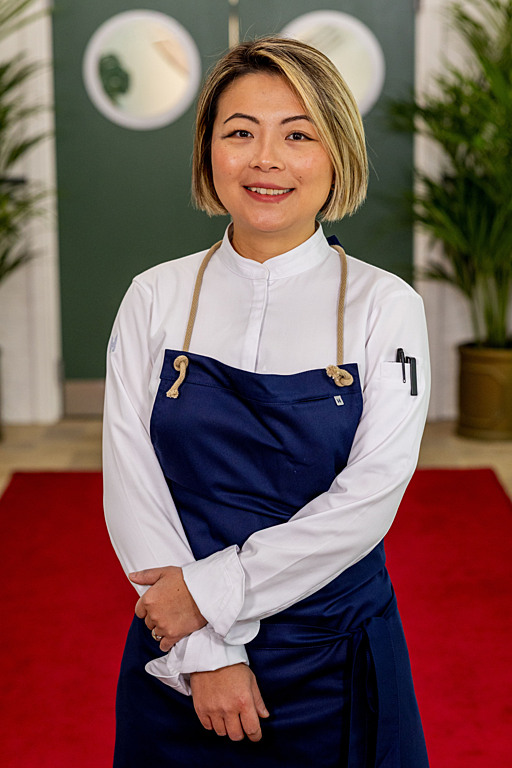
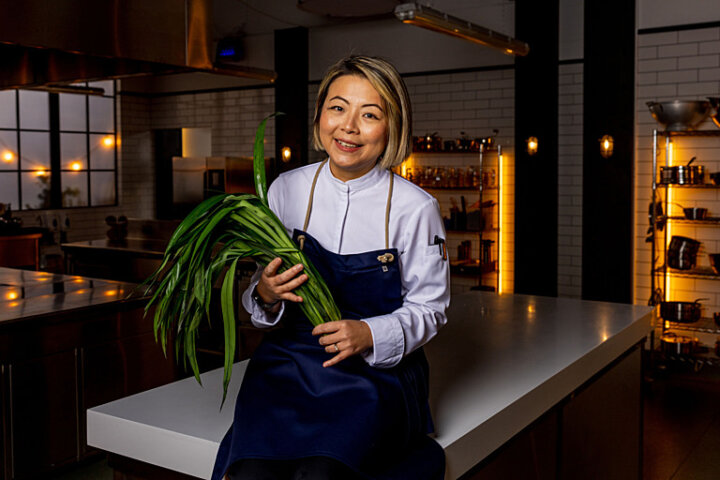
Great British Menu (GBM) returned to our screens on 24 February 2026 for season 21. The BBC2 show puts the nation’s most talented chefs to the test. At Women in the Food Industry we are continuing our series of interviews with the strong female line-up of chefs from across Britain competing to serve their dish at the final banquet. Our co-founder, Mecca Ibrahim, interviewed chef Weike Zhao is Head Chef at Wood Hall Hotel & Spa in Wetherby, where she has led the 2-AA Rosette restaurant since June 2022.
Originally from China, Weike oversees a team focused on sustainability and seasonality, crafting menus that reflect both the local landscape and her own Asian heritage.
How did you start working in the food industry? And where did you train to be a chef?
My love of food really started when I was very young. I’ve always loved eating well and trying different kinds of food. Whether it was dining out or enjoying my mum’s cooking at home, food was always something I was excited about. I often joke that I’m just greedy about food- I’m always curious to taste new things.
My mum was probably the biggest influence on me. She was actually an accountant, not a chef, but she was an amazing cook. For her, food was about bringing people together. We had guests at our house almost every weekend, and she would spend so much time in the kitchen preparing meals for everyone. I would often help her, so in a way I became her little sous chef at home. That’s really where it all began – I was involved in cooking from a very young age.
After finishing university, I had the opportunity to go to Australia and I found myself choosing between two possible career paths: becoming a hairdresser or becoming a chef. In the end it felt like an easy decision. I loved food and I enjoyed cooking, so I thought, why not become a chef?
I moved to Australia and enrolled in a two-year culinary course at TAFE. It was a great experience because we learned all the fundamentals – techniques, skills and knowledge – but we also had a lot of opportunities to cook in real environments. The college had its own restaurant that served real guests, so every week we were able to practise in a professional setting.
We also took part in events outside the college. For example, we helped at Jamie Oliver’s “Longest Lunch” in Melbourne and supported various food events where well-known Australian chefs were cooking. It meant we could volunteer, work alongside experienced chefs and get a real sense of what the industry was like.
After those two years, I never really stopped. I enjoyed the work and did well during my training, and the chefs I worked with were very supportive and keen to have me back in their kitchens. From that point on, I just continued in the industry and I’ve loved it ever since.
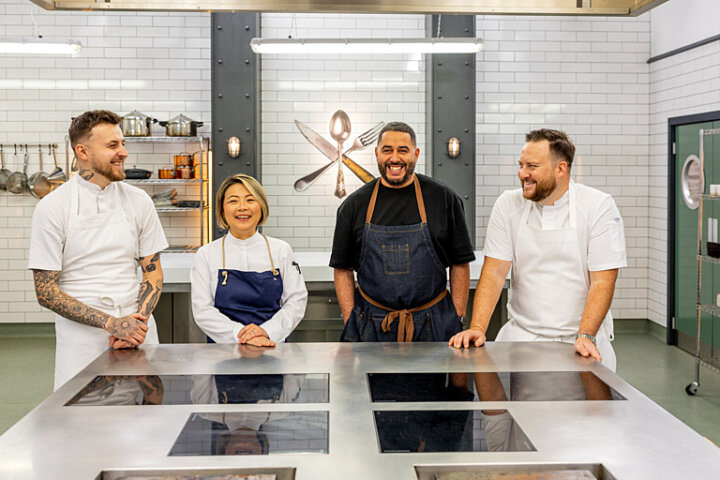
This is your first time on Great British Menu, how did you get onto the show?
Getting onto Great British Menu was a complete shock. I’m a huge fan of the show and I’ve watched every episode, always admiring the chefs and the incredible ideas they come up with. I never imagined I would be part of it myself. I actually assumed you had to be a British citizen to take part, and I also thought the competition was mainly for Michelin-starred chefs, so I didn’t see myself fitting into that world.
So when one of the producers contacted me, I was honestly over the moon. I was so happy—probably as excited as a two-year-old! At the same time I was nervous, but mostly I just felt grateful for the opportunity. It was something I could never say no to.
Once the initial excitement settled, I started thinking seriously about how I would approach it. I asked myself what my strengths were and why they might have chosen me. I realised it probably wasn’t because of connections or social media—it was more about the work I’ve put into the industry over the years.
I’ve spent a long time working in Yorkshire’s food scene, gained Michelin plates twice in the UK, doing demonstrations, supporting initiatives like FutureChef and getting involved in the local industry wherever I could. When I reflected on that, I realised those years of effort had built a reputation and helped people understand who I am as a chef. That gave me confidence going into the competition.
For me, Great British Menu became an opportunity to showcase my food, my personality and my attitude to cooking. I didn’t go into it thinking about fame-I just wanted to represent myself and the work I’ve been doing in the UK for many years.
How did you prepare for the British Movies brief?
When I first heard I’d be taking part, I remember wondering what the theme would be that year. I thought it would be great if it was films, because I really enjoy watching movies – and when it was announced that the brief was British films, I was excited.
The challenge, though, was linking the film to my region, the North East. I wasn’t very familiar with films connected to that area, so I had to do quite a lot of research. Many of the films people immediately think of are set in places like London or Liverpool, or they’re big international productions, so I really had to dig a bit deeper to find stories connected to the North East.
But I actually loved that process. For me it became a journey of discovery – not just about films, but also about the UK and the region where I live and work. For some chefs, they might already have those references in their heads, but for me everything was new, and I enjoyed learning about it.
I watched a lot of films before deciding which ones to use as inspiration for my dishes. I looked into the cast, where the films were made, and the locations they were connected to. It was a really fun part of the competition, doing that research and finding stories that I could then translate into food.
It was definitely a challenge, but also one of the most enjoyable parts of preparing for Great British Menu.
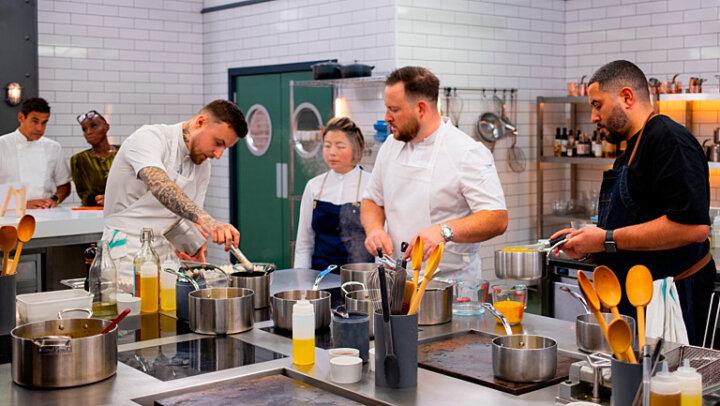
It’s your first time on Great British Menu. How did you find working in the studio with all the cameras and crew?
I actually found it fine because I went into the experience with a very open mind. From the beginning, I didn’t go there thinking I had to win the competition. I was very aware of where I am in my career, so my goal was simply to cook my food, show what I can do and get honest feedback from the other professional chefs. In many ways, it was a bit of a reality check for me – to see where I stand and to learn from the experience.
Because of that mindset, I didn’t feel too much pressure to present a “perfect” version of myself. Of course I wanted to do my best, but I wasn’t there to pretend everything would be flawless. I just wanted to be myself and cook the food I believe in.
Surprisingly, the cameras didn’t make me nervous. Even though there are a lot of them in the kitchen, once I was busy and focused on cooking, I barely noticed them. I was just concentrating on my own work.
What I couldn’t ignore – in the best possible way – was how supportive the crew were. The producers, directors and the whole team were fantastic. From the moment I agreed to take part, they were in regular contact, checking in with me every week to see how I was doing, both emotionally and with my preparation. They were always asking if I needed any help and making sure I felt supported. The whole team was brilliant, and that really helped make the experience enjoyable.
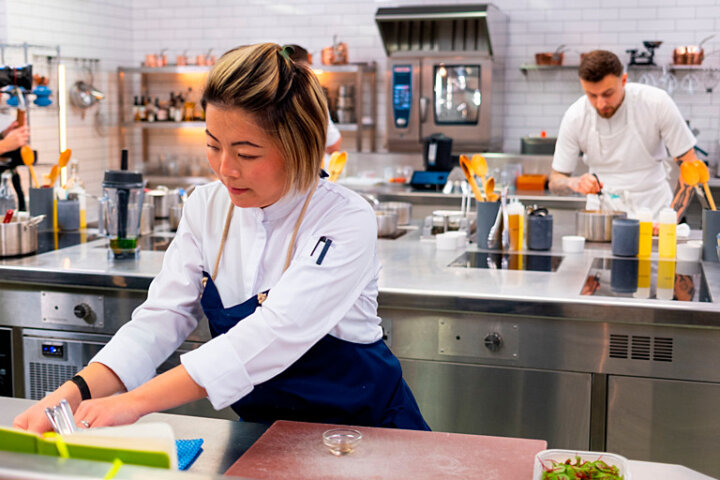
Without giving anything away about what happens on the show, which course was the hardest to prepare and research for?
The main course was definitely the hardest for me, and it was actually the last dish I decided on. There’s a lot of pressure around the main course on Great British Menu, because it’s often seen as the centrepiece of the banquet. Everyone wants their main course to be the one that makes it through, so it naturally carries a lot of weight.
For me, the challenge was deciding both the dish and the film that would inspire it. I spent a lot of time researching and watching different films, trying to find one that would be interesting for the audience but also connect to the North East. That balance was quite tricky. I didn’t want the idea to feel too serious – I wanted something that could also be a bit fun and engaging.
Another big decision was the protein. With my background, I really wanted to think carefully about what ingredient to use, where it would come from, and how I could showcase local produce. At the same time, I wanted to bring in a little bit of Asian flavour, which is part of my identity as a chef. Finding the right way to combine those elements took quite a lot of thought.
Interestingly, the other courses came to me much more quickly. My starter, fish course and dessert ideas all came quite naturally once I had chosen the films behind them. The fish course in particular is based on one of my favourite films. It’s very personal to me because it connects to my childhood and my background.
With that dish, I also wanted to show something about how we eat in China- the flavours we grow up with and the way we experience food. So although the main course was the most difficult to decide, the fish course is probably the one that feels closest to my heart.
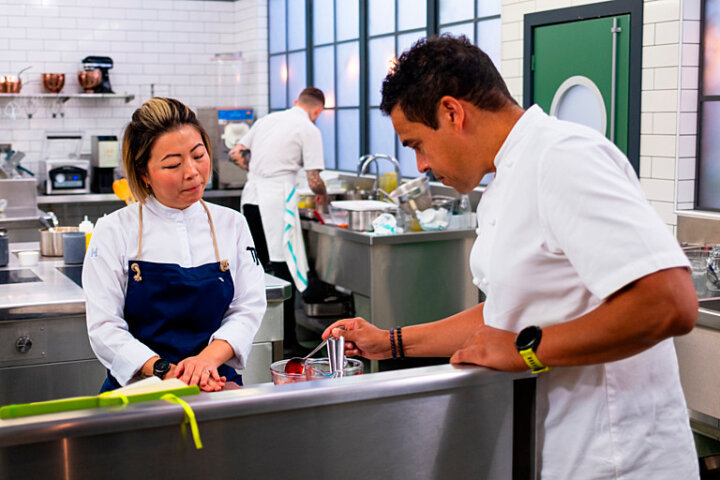
GBM is very much known for its props, did you embrace the props on the show?
Yes, I did embrace them, although it was definitely a challenge for me. I wouldn’t naturally describe myself as a very creative person when it comes to props, so it pushed me outside my comfort zone a little.
I had quite a few ideas, but the practical side was tricky because I didn’t know anyone who could make custom props for me. In the end, I did a lot of research and ended up creating some of them myself. There was quite a bit of DIY involved, as well as asking friends for help and advice along the way.
The props I used weren’t particularly complicated or expensive. In fact, most of them were quite simple items that people could easily get hold of themselves. They were special in the context of the dishes, but they weren’t rare or elaborate pieces.
For me, it was really about mixing and matching different elements – finding the right plates and combining them with the props so that everything worked together and made sense visually with the story of the dish.
It was definitely an interesting part of the process, and something I enjoyed experimenting with.
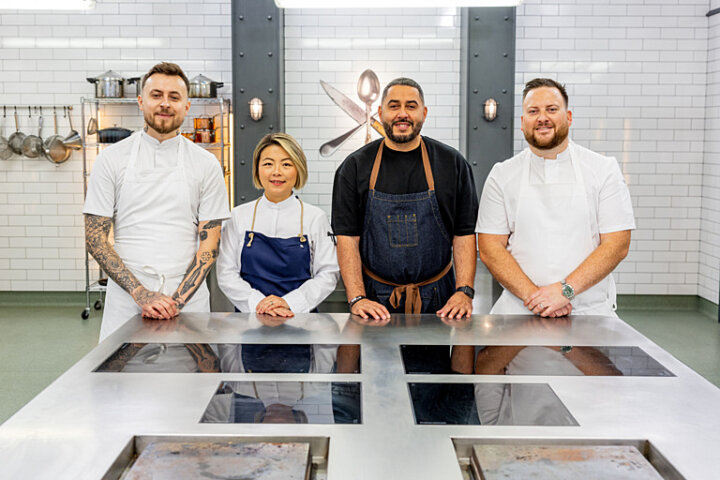
Which chef that you have worked with has given you the most inspiration?
One of the chefs who has inspired me the most is a head chef I worked with in Melbourne called Derek. This was during my time in Australia, and working with him had a big impact on the way I think about food today. Before that, he had worked at Per Se, the three-Michelin-star restaurant founded by Thomas Keller, so he brought a very high level of experience and discipline into the kitchen.
What I remember most about him was his passion for food. Even during our lunch breaks he was always learning – watching videos, reading cookbooks or exploring new ideas. Then the next day he might come in with a completely different dish or concept that he wanted to try.
He also had a huge respect for ingredients, which really stayed with me. His philosophy was never to overcomplicate a dish, but instead to treat every ingredient carefully and let it shine on its own. The focus was always on bringing out the natural flavours rather than adding unnecessary elements.
That approach has definitely influenced my own cooking. I still believe the best food is often the simplest—when you allow great ingredients to speak for themselves, while adding just the flavours that enhance them without making the dish too complicated.

If you were marooned on a desert island, what was the one type of dish you could happily live on?
It would have to be noodle soup. That’s something we eat all the time where I’m from – it can be breakfast, lunch or dinner. When I was growing up, I used to have rice noodle soup every morning for breakfast, so it’s a flavour that really reminds me of home and of my childhood.
Because I’ve been away from home for so many years now, dishes like that feel especially meaningful. There’s something very comforting about those familiar flavours, and they immediately bring back memories.
So if I could have one thing on a desert island, it would definitely be a bowl of noodle soup. It’s simple, comforting and it always tastes like home.
Finally, what do you know now that you wish you could have told your younger self when you were starting out?
Career-wise, I think I would tell my younger self to find my passion as early as possible and stick with it. Once you discover what you truly love doing, it gives you the motivation to keep going, even when things are difficult. Without that passion, everything can feel much harder.
I didn’t start pursuing cooking until after I had finished university in China, when I was about 23. That was when I finally realised what I really wanted to do and decided to study culinary arts. Looking back, I sometimes wish I had discovered that passion a little earlier. But once you know what you love, the important thing is to work hard and stay committed – everything else tends to follow from there.
On a personal level, I would probably also tell my younger self not to go too far away from family. I’ve spent many years living far from home, and it makes you realise how important those connections are.
Weike will be appearing on Great British Menu from Tuesday 24th March 2026 representing the North East and Yorkshire. Look out for more in our series of interviews with the great women chefs on Great British Menu 2026 – this page will be regularly updated.