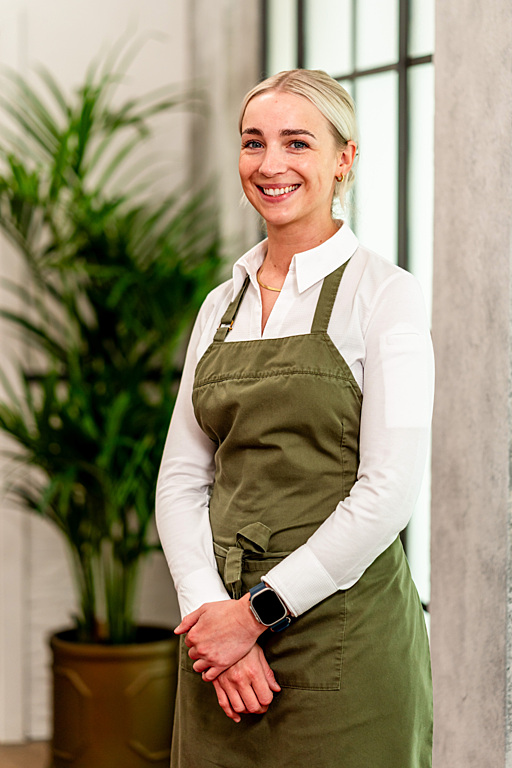
Great British Menu (GBM) returned to our screens on 24 February 2026 for season 21. The BBC2 show puts the nation’s most talented chefs to the test. At Women in the Food Industry we are continuing our series of interviews with the strong female line-up of chefs from across Britain competing to serve their dish at the final banquet. Our co-founder, Mecca Ibrahim, interviewed private chef Louisa Ellis who is creating bespoke tasting menus for her clients utilising the skills she learnt from working in Michelin-starred kitchens.
Born in Luton, Louisa now works in Nottingham,
How did you start working in the food world and where did you train to be a chef?
I knew from quite a young age that I wanted to be a chef. When I chose my GCSEs, I decided to take food and cooking, and that really set everything in motion. After school I went to college to continue studying food, and from there I moved straight into hotel kitchens in my hometown of Luton.
It didn’t take long to realise that if I wanted to work in more ambitious kitchens, particularly in fine dining, I’d need to move further afield. My first real Michelin-starred experience came when I moved to Birmingham to work at Adams. That was a huge learning curve for me. I’d already learned the basics at college, but suddenly I was in a kitchen where everything was about precision, creativity and thinking outside the box. I learned so much there — from fish and meat cookery to sauce work — all within a modern British style that introduced me to ingredients and techniques I hadn’t used before.
After that I joined The Wilderness in Birmingham, working with Alex Claridge, who is probably one of the most inspiring mentors I’ve had in my career. His approach to running a kitchen was very different to what I’d experienced before. He was incredibly supportive of his team and always encouraging people to push themselves and develop their ideas, which created a really positive environment to work in.
The next step for me was moving to Nottingham to work at Restaurant Sat Bains, which holds two Michelin stars. I’d always wanted to experience a two-star kitchen, so I went there initially for a week of work experience. That turned into a job offer, which I happily accepted, and I relocated to Nottingham to take that next step in my career.
These days I run my own private dining business, which I’ve been doing for around seven and a half years. Private chefs sometimes get a reputation for simply cooking for wealthy clients, but what I wanted to create was something closer to a restaurant-style experience in people’s homes. I prepare and cook food to the same fine-dining standards you’d expect in a restaurant, but in a much more personal setting — almost like bringing the chef’s table to someone’s dining room.
Over the years I’ve taken on a variety of projects, from cooking for families abroad to pop-ups and events, but the heart of the business is still private dining. It’s about giving people a memorable experience for a special occasion and making the most of the space they have at home.
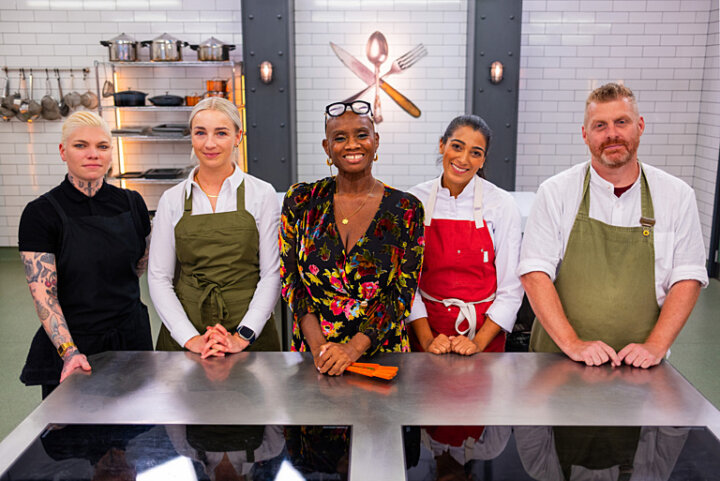
This is your second time on Great British Menu, how did you get onto the show and how did you prepare for the British Movies brief?
I’d always hoped I might return to Great British Menu one day. I was really proud of how far I got the first time, but I’m quite competitive with myself and I always felt I’d like to go back and see if I could push things a little further.
When the team contacted me last year to ask if I’d consider returning, I said yes straight away. Not long after that they revealed the theme – British movies – which I was really excited about. It’s such a brilliant brief because films are something people feel genuinely passionate about in their spare time, so there’s already an emotional connection there.
My preparation involved a lot of research, which essentially meant watching plenty of films and thinking about which ones could translate well into dishes, particularly ones with a local connection. What I loved about the brief was how many different directions you could take it in. It’s not just about referencing a film visually; it’s also about the feelings and atmosphere a film creates and finding ways to express that through food.
The tricky part is that you’re not simply cooking dishes that taste good – they also have to clearly meet the brief. Presentation plays a big role in that, including the use of props, which can help tell the story behind the dish. I’ve always found that element quite challenging because my instinct is to let the food speak for itself. I admire chefs who can bring a concept to life purely on the plate.
That said, I did try to embrace props where they genuinely added something to the dish, while keeping the focus firmly on the food. I probably overthought it at times, because I was very conscious of not relying on props to do all the storytelling. If an idea felt like it only worked visually and not through the cooking itself, I’d scrap it and start again.
It meant going down a lot of creative rabbit holes and reworking ideas several times before I felt they struck the right balance between flavour, concept and presentation. It’s quite a mentally demanding process because you don’t know how the judges will respond on the day, but that’s also part of what makes the challenge so exciting.
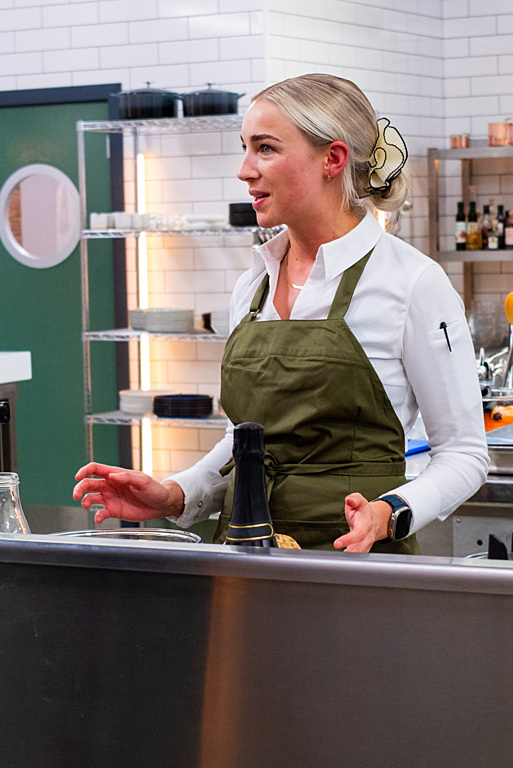
We’ve talked about you being on the show before – how different was the experience this time?
I thought going back onto Great British Menu for a second time would make me feel more confident because I already knew what to expect. I was familiar with the kitchen, the format and the pace of the competition, which definitely helped me settle in more quickly.
But in reality, I probably put more pressure on myself this time around. I went in with the mindset that I wanted to go further than I had before, and that expectation made the experience more intense at times. I had to remind myself to rein that in occasionally and focus on the immediate goal – simply cooking my full menu the way I wanted to. If I could achieve that, I’d be proud of it.
There were moments when I definitely felt the pressure more than I expected. It’s not just about cooking dishes you love; you’re doing it under very tight time constraints and in a competitive environment where not everything is within your control. That can be mentally challenging.
At the end of the day, it is a competition, and the atmosphere can be quite intense. You’re constantly pushing yourself while also dealing with the pressure of being judged, so it takes a lot of focus and resilience to get through it.
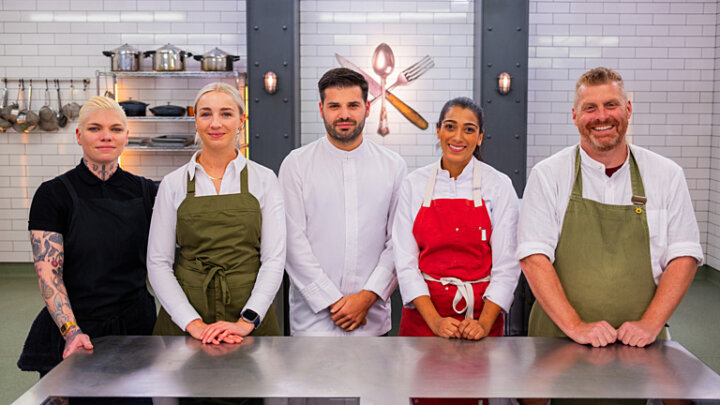
Which was the hardest course to prepare and research for?
I think for a lot of chefs on Great British Menu, the main course is often the most challenging – and I’d agree with that. It’s usually a hot dish, built around meat and vegetables, and there’s only so much you can do with those elements when you’re also trying to represent a film or a character.
With some courses it’s easier to be more visual or playful, but with a main course you still need it to feel like a proper, refined dish. The challenge is finding a way to connect it to the brief without making it look gimmicky. You might draw on things like ingredients from a particular region, or wines and flavours associated with a place or character, but translating that visually on the plate can be tricky.
I found myself going around in circles at times, trying to strike the right balance between creativity and keeping the dish grounded in good cooking. Sometimes you feel like you need to push the concept further just to make sure you’re clearly hitting the brief.
None of the courses were easy to develop, but the main course definitely required the most head-scratching in terms of thinking outside the box while still keeping the food at the centre of it all.
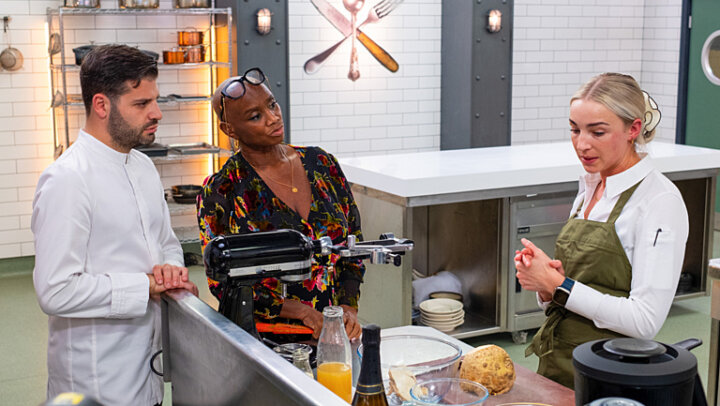
GBM is very much known for its props, did you embrace the props on the show?
To a certain extent, yes – but I tried to use them only where they genuinely added something. On Great British Menu the chefs fund their own props, so you have to think carefully about what you choose to include. There’s also the question of sustainability, and the practical side of whether something could realistically be used again if the dish made it through to the banquet.
For me, the main focus was always the food. I wanted the storytelling to come primarily from what was on the plate rather than relying too heavily on props. Where they helped bring the idea to life, I was happy to include them, but I tried to keep that balance so the cooking itself remained the most important part of the dish.

Which chef that you have worked with has given you the most inspiration?
I’ve been lucky to work with a lot of different chefs from a range of backgrounds, and they’ve all influenced me in different ways. But one who really stands out is Alex Claridge.
What I admire most about him is his approach to running a kitchen and managing a team. He creates a really supportive environment and genuinely wants the people around him to succeed, which makes a huge difference when you’re working in what can be a very intense industry.
He’s also incredibly creative with ingredients and loves using unusual things that many people might never have heard of before. That curiosity and willingness to experiment really resonated with me and helped shape how I think about food. His style of leadership and the way he treats his staff is something I’ve always found really inspiring.

If you were marooned on a desert island, what was the one type of dish you could happily live on?
My answer to this probably changes every year – I can’t even remember what I said when you asked me last time! I think my tastes have matured a bit since then, though.
Right now I’d probably say Tiramisu. It ticks all the boxes for me: it’s boozy, it’s got coffee in it, and I absolutely love sweet things. I’ve definitely got a sweet tooth, so it would keep me very happy.
I did briefly think about giving the sensible answer and choosing something really nutritious, but if I’m stuck on a desert island I’d rather enjoy myself. I’d be there for a good time, not a long time!
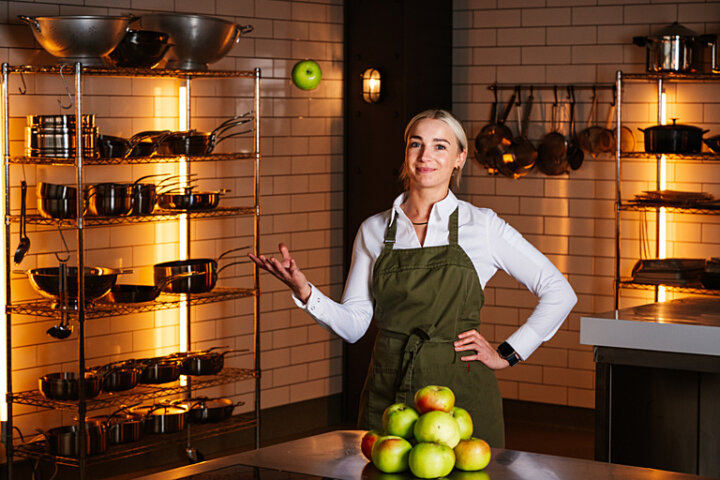
Finally, what do you know now that you wish you could have told your younger self when you were starting out?
I think the biggest thing would be to believe in myself a bit more. When I was younger, I spent a lot of time trying to absorb everything like a sponge, learning from the chefs around me and following the paths that had already been set. That was valuable, of course, but at the time I didn’t always realise that I could have my own creative voice as well.
Starting my own business really changed that for me. It gave me the freedom to follow my own path, to work out what I truly enjoy cooking and how I want to do it. Looking back, I’d probably tell my younger self to trust that instinct sooner.
I’d also remind myself that where you come from doesn’t define what you’re capable of achieving. I grew up on a council estate, and when you’re young it’s easy to feel like certain opportunities might not be meant for you. But that isn’t true — if you’re passionate and prepared to work hard, there are so many possibilities.
If there’s one trait that has carried me through, it’s perseverance. I’ve entered a lot of competitions over the years, and there have definitely been moments where it would have been easier to stop. But I’ve always had that determination to go back, try again and push myself further. So the advice I’d give my younger self is simple: keep going, keep believing, and don’t give up.
Louisa will be appearing on Great British Menu from Tuesday 10th March 2026 representing the Central region. Look out for more in our series of interviews with the great women chefs on Great British Menu 2026 – this page will be regularly updated.